
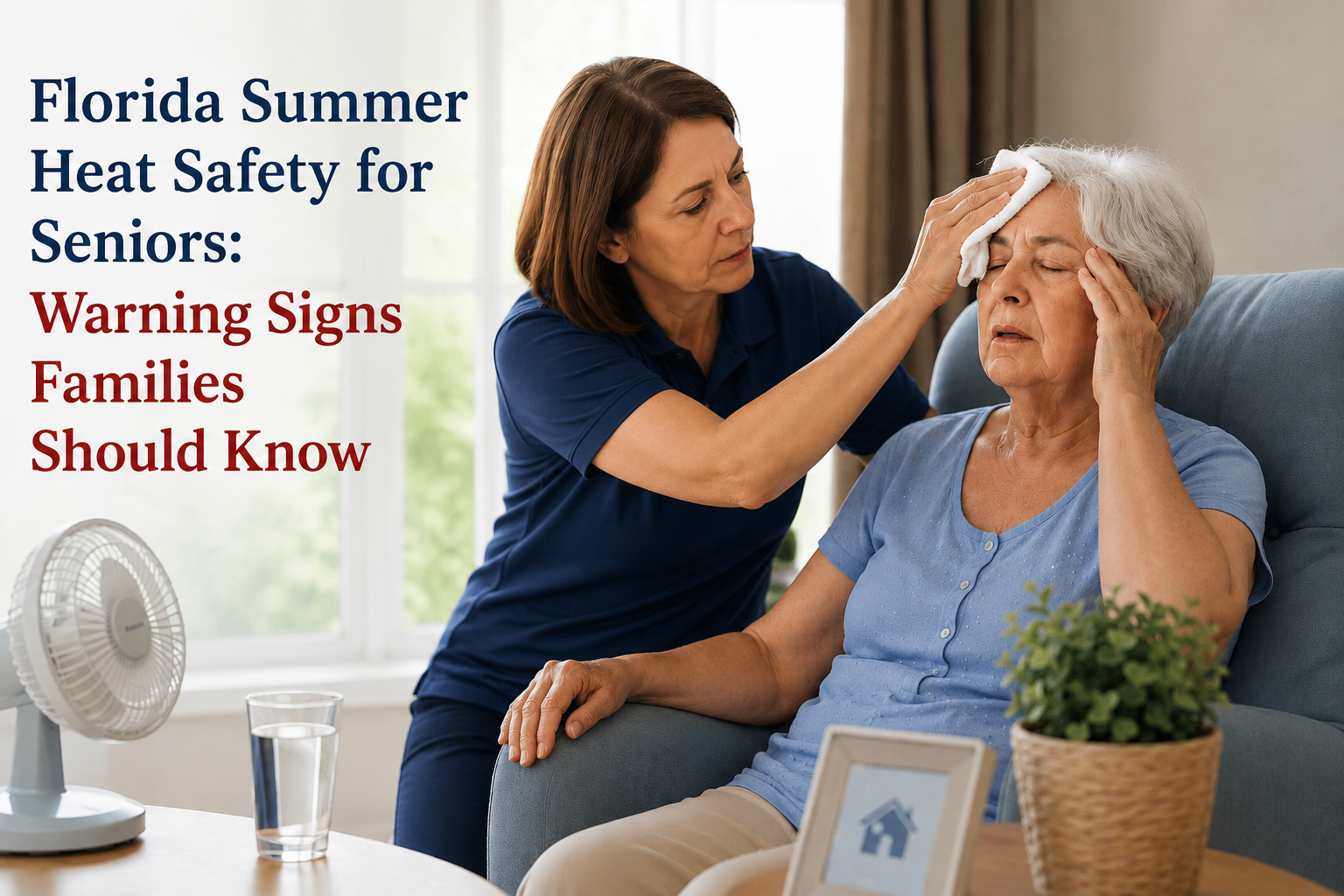
Florida’s summer heat and humidity put older adults at real risk of dehydration, heat exhaustion, and heat stroke. Aging bodies regulate temperature less efficiently than younger ones, so what feels like an uncomfortable afternoon to one person can become a medical emergency for a senior. Once the temperature climbs above 80 degrees Fahrenheit, or the heat index feels even higher due to Florida’s humidity, it’s time for seniors and caregivers to take precautions. Understanding Florida summer heat safety for seniors and knowing the warning signs gives families in Palm Beach County a real head start on prevention.
Table of Contents
Why Older Adults Face Greater Risks During Florida’s Summer Heat
Florida summer heat safety for seniors begins with understanding how aging affects the body’s ability to stay cool. Older adults sweat less efficiently, adjust to temperature changes more slowly, and often take medications that interfere with the body’s natural cooling response, a combination that increases the risk of heat exhaustion, even during routine summer days.
Changes That Come With Aging
As people age, the body’s sweat glands become less responsive, and thirst signals weaken. This means a senior may already be dehydrated before they even feel thirsty.
How Chronic Health Conditions Increase Risk
Conditions such as heart disease, diabetes, and kidney disease all affect how well the body handles heat and fluid balance, making seniors with these conditions more susceptible to heat stroke.
How Certain Medications Affect Heat Tolerance
Some of the most common medications among older adults can quietly raise heat risk. Diuretics (often prescribed for blood pressure or heart failure) increase fluid loss. Beta-blockers and other blood pressure medications can blunt the body’s normal response to heat. Certain antihistamines and antidepressants reduce sweating, one of the body’s main cooling tools. None of this means a senior should stop taking prescribed medication. It means reviewing summer heat risk with a doctor or pharmacist before temperatures peak is a simple, often overlooked safeguard.
Aging, chronic illness, and certain medications combine to make heat far riskier for seniors than for younger adults, which is why early awareness matters more than reaction after the fact.
Warning Signs of Heat-Related Illness in Older Adults
Florida summer heat safety for seniors begins with recognizing the early warning signs of heat-related illness. Recognizing symptoms early can mean the difference between a quick recovery and a hospital visit, as heat-related illnesses in seniors often progress in stages—from mild conditions to life-threatening emergencies.
Condition: Heat Rash
Symptoms: Red, itchy clusters of small bumps, often in skin folds or under clothing
Action: Move to a cooler, drier area, keep the area dry, and avoid further sweating
Condition: Heat Cramps
Symptoms: Muscle spasms and pain, usually in the legs or abdomen
Action: Stop activity, rest in a cool place, and hydrate with water or an electrolyte drink
Condition: Dehydration
Symptoms: Increased Thirst, Dark-Colored Urine, Low Energy, and Lightheadedness
Action: Offer water, move to a cool area, and monitor closely
Condition: Heat Exhaustion
Symptoms: Heavy sweating, weakness, nausea, cool or clammy skin
Action: Move indoors, apply cool cloths, hydrate, and call a doctor if symptoms persist
Condition: Heat Stroke
Symptoms: High body temperature, confusion, rapid pulse, hot and dry or flushed skin, loss of consciousness
Action: Call 911 immediately. This is a medical emergency
Heat rash and heat cramps are the body’s early warning signals. Left unaddressed, they can progress toward heat exhaustion and, eventually, heat stroke.
Sun Exposure and Sunburn: An Overlooked Risk
Florida summer heat safety for seniors includes protecting older adults from prolonged sun exposure as well as extreme temperatures. Sunburn is more than a cosmetic concern for seniors, it’s a sign of skin damage that can make the body work harder to cool itself and, in some cases, lead to fever, chills, or nausea. Protecting seniors from direct sunlight is just as important as helping them stay cool and hydrated.
- Wear lightweight, protective clothing that covers the arms and legs
- Use a broad-spectrum sunscreen with SPF 15 or higher, reapplied regularly
- Add a wide-brimmed hat during any outdoor time
- Move indoors at the first sign of red, tender, or warm skin
10 Ways to Protect Seniors During Florida’s Summer Heat
Florida summer heat safety for seniors relies on simple daily habits that can significantly reduce the risk of dehydration and heat-related illness in older adults.
- Stay hydrated, offering water regularly even without thirst cues
- Avoid outdoor activities during peak heat, generally 10 a.m. to 4 p.m.
- Dress for hot weather in lightweight, breathable, light-colored fabrics
- Use air conditioning safely and check that units are working properly
- Stay Hydrated with Water-Rich Foods Like Watermelon, Cucumbers, and Citrus Fruits
- Review medications with a doctor or pharmacist before summer
- Monitor indoor temperature, especially in bedrooms
- Create a daily wellness routine that includes hydration and rest breaks
- Watch weather alerts from the National Weather Service for heat advisories
- Schedule regular check-ins, whether by family, neighbors, or a caregiver
Most heat-related emergencies are preventable with consistent daily attention rather than occasional effort.
What Happens When a Florida Storm Knocks Out the Power
Florida summer heat safety for seniors becomes even more important during hurricane season, when power outages can quickly turn into a serious health risk for homebound older adults. Without air conditioning, indoor temperatures can rise to unsafe levels within hours, especially in Florida, where intense summer heat often continues well into the night.
- Identify a backup cooling plan before storm season starts, such as a family member’s home, a hotel, or a designated cooling center
- Keep a battery-powered or car charger available for phones and medical alert devices
- Have a portable fan and cooling towels on hand in case of a short-term outage
- Know which nearby libraries, malls, or senior centers serve as public cooling spaces during extended outages
- Discuss a heat-specific emergency plan with home healthcare providers or family caregivers in advance, not after the power goes out
A cooling plan for storm-related outages is just as important as a hurricane supply kit, particularly for seniors who depend on air conditioning to manage chronic health conditions.
How Family Caregivers Can Help During Heat Waves
Family caregivers play a frontline role in senior heat safety, especially when a loved one lives alone.
- Monitoring hydration throughout the day
- Setting medication reminders
- Arranging transportation to avoid midday heat exposure
- Making daily phone calls or visits to check in
- Preparing water-rich meals and light snacks
- Helping with cooling strategies like fans, air conditioning, and cool showers
- Having an emergency plan in place, including contact numbers and nearby cooling centers
Social isolation raises risk during heat waves, particularly for seniors who live alone. A daily check-in plan with a family member, neighbor, or caregiver, or a medical alert system with temperature or fall alerts, adds an important layer of protection when no one can be physically present every day.
How Home Healthcare Can Support Seniors During Florida Summers
For families who can’t be present every day, professional home healthcare fills the gap between independence and safety.
Family Caregiver: Available part-time, often balancing work and other responsibilities
Home Healthcare Professional: Scheduled visits with consistent monitoring and clinical judgment when needed
Skilled nursing services can support medication management and monitor chronic conditions that make heat more dangerous. Personal care and companion care provide help with hydration reminders, meal preparation, and daily wellness routines for seniors who want to remain safely at home. For veterans managing summer heat alongside service-related health conditions, Veterans Care Services offers additional support tailored to their needs.
Home healthcare doesn’t replace family involvement. It extends it, especially during the months when heat-related risks and hurricane-related power outages are highest.
Who May Need Extra Help During Hot Weather?
Certain seniors face higher risk and may benefit from additional support during summer months:
- People living alone
- Those with heart disease or diabetes
- Individuals with mobility issues
- Anyone recovering from recent surgery
- People experiencing memory loss
- Veterans managing chronic conditions
- Anyone with a chronic illness affecting fluid balance
- Anyone relying on medical equipment that requires reliable electricity
Frequently Asked Questions
1. Why is summer heat dangerous for seniors?
Aging reduces the body’s ability to regulate temperature and sweat efficiently, so seniors face a higher risk of dehydration, heat exhaustion, and heat stroke even in moderate heat.
2. What temperature is too hot for older adults?
Once temperatures climb above 80 degrees Fahrenheit, or the heat index feels higher due to humidity, older adults should take precautions such as limiting outdoor activity and staying in air-conditioned spaces.
3. Can dehydration happen indoors?
Yes. Poor air conditioning, low fluid intake, or certain medications can lead to dehydration even without direct sun exposure, particularly during a power outage.
4. What are the first signs of heat stroke?
Confusion, a rapid pulse, and hot, dry, or flushed skin are early warning signs that require immediate medical attention.
5. Is home healthcare available during heat advisories?
Yes. Home healthcare visits can continue during heat advisories, with caregivers and clinical staff monitoring hydration, medication needs, and overall wellness.
Conclusion
Florida summer heat safety for seniors starts with preparation, awareness, and consistent daily habits. Recognizing the warning signs of heat-related illness, planning for storm-related power outages, and knowing when to seek help can significantly reduce risks and help older adults stay safe throughout Florida’s hottest months.
If you or a loved one could benefit from compassionate in-home healthcare during Florida’s summer months, Vertus HealthCare is here to help with personalized care tailored to your needs. Call us today to learn more.
Keep Your Loved One Safe This Summer
Florida summer heat safety for seniors begins with the right support. If you’re worried about a loved one during the summer months, Vertus HealthCare offers compassionate in-home care to help older adults stay safe, comfortable, and independent at home.
Call (561) 509-7069 to schedule your free consultation.
Contact Us Today
Call: (561) 509-7069
Email: Info@vertushealthcare.com
Address: 2623 S Seacrest Blvd, Suite 206, Boynton Beach, FL 33435
Stay Connected